
JULY 29, 2026
What California’s Draft SB 54 Program Plan Means for EPS Packaging
July 29th 2026
As Extended Producer Responsibility (EPR) programs continue to expand globally, and across the United States, California’s first draft SB 54 Program Plan provides the clearest view yet of how one of the country’s most ambitious packaging EPR programs will be implemented. This plan was published by California’s approved Producer Responsibility Organization, Circular Action Alliance (CAA), on June 15, 2026 and is now in a 60-day public comment period. The program will begin by January 1, 2027.
Because expanded polystyrene (EPS) remains one of the most widely used materials for temperature-controlled shipping, its treatment under California’s EPR program is of particular interest to the healthcare and life sciences supply chain. It is also important to note that SB 54 includes exemptions for certain packaging used to contain medical products. However, not all temperature-controlled packaging falls within these exemptions, making the Program Plan’s approach to EPS particularly relevant for manufacturers and distributors evaluating their compliance obligations.
California’s Program Plan was developed to meet the requirements of SB 54 and other applicable regulations while outlining strategies to support statewide recycling and reuse systems. It draws on technical analyses and extensive collaboration with local governments, recycling and reuse organizations, service providers, producers, community groups, and public stakeholders.
In Chapter 3: Materials Strategy and Covered Material Category Compliance Plan, each packaging material category is designated with one of three compliance pathways: Maintain and Strengthen Compliance, Phase In to Achieve Compliance, and Phase Out to Achieve Compliance.
What the Phase-In Approach Means for EPS
One of the most significant developments for the temperature-controlled packaging industry is the designation of expanded polystyrene (EPS). Along with poly coated paper, cartons, and plastic films, EPS is designated as a material that will follow the “Phase In to Achieve Compliance” pathway rather than a phase-out pathway. Under this designation, materials are not yet widely recyclable or compostable in California and face challenges related to collection, sorting, or end markets. However, the draft Program Plan concludes that these materials have a reasonable pathway to achieving compliance through targeted system improvements.
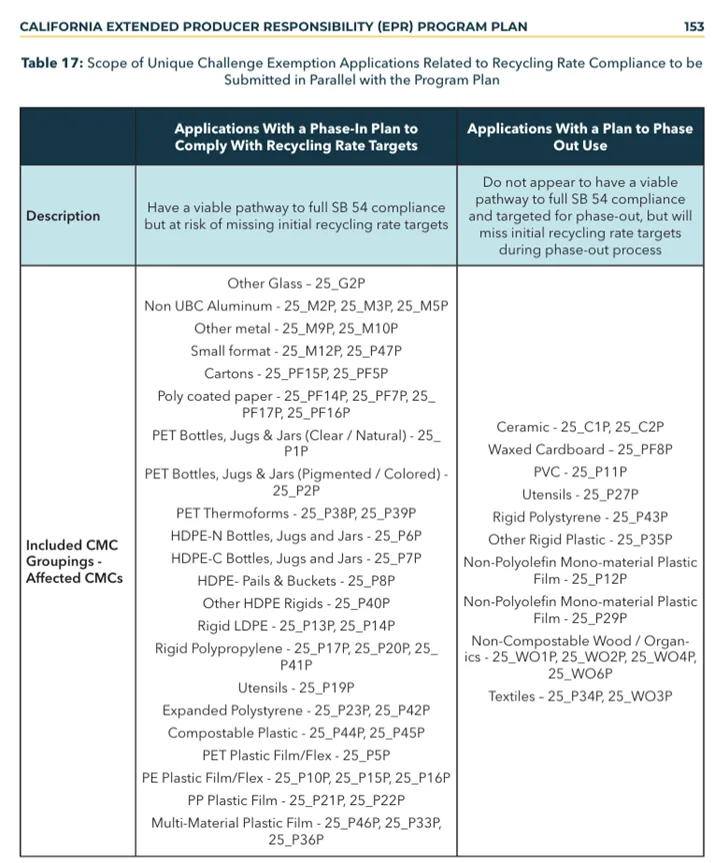
Figure 1: Table 17 from Circular Action Alliance California Extended Producer Responsibility (EPR) Program Plan (June 15, 2026)
This designation reflects the recognition that EPS is capable of meeting SB 54 requirements, but that compliance depends on additional time for infrastructure expansion and other targeted improvements. As a result, the draft Program Plan anticipates using the “unique challenges” provisions to allow additional time for meeting the 2028 and 2030 recycling targets. If adopted, the “unique challenges” exemptions would have several important implications for producers:
- Producers may use or sell these materials even if the targets are not met.
- The materials are still covered, and producers must register and pay fees.
- Exemptions are active for 2 to 5 years with the possibility for renewal.
As CalRecycle and Circular Action Alliance continue implementing California’s EPR program, the focus is on building upon existing recycling and reuse systems to expand collection opportunities and strengthen end markets. Unlike materials commonly recovered through curbside recycling programs, EPS requires alternative collection and processing approaches because most existing curbside systems and material recovery facilities (MRFs) are not optimized to efficiently capture and recycle it. The draft plan outlines several proposed strategies for expanded polystyrene, including expanding access to recycling, developing alternatives to curbside collection programs, enhancing education and outreach efforts, promoting reuse and refill initiatives, and implementing additional measures to improve the direct flow of recyclable materials to processing facilities.
How ThermoSafe is Supporting EPS Recycling
While California’s Program Plan remains in draft form and is subject to public comment, it provides an important indication of how EPS may fit within the state’s long-term EPR strategy. Rather than signaling the end of EPS packaging, the proposed phased approach recognizes that compliance is achievable through continued investment in collection infrastructure, recycling capacity, and market development.
At ThermoSafe, we are already contributing to these efforts through established EPS collection programs at our U.S. facilities and by continuing to expand opportunities for customers to return EPS for recycling. We remain committed to supporting practical, science-based solutions that improve material recovery while delivering reliable temperature-controlled performance.
ThermoSafe will continue to monitor California’s SB 54 implementation and engage with customers and industry partners as the Program Plan evolves through the public comment process and final approval.
Keep Updated
Learn more about US and European sustainability regulations as they pertain to you and the packaging that you use in the Legislation Resource Center.
Stay up to date with regulations
Dive into the world of a leading packaging company’s approach to recycling and sustainability in the ThermoSafe annual Report.
Watch: More about how to recycle EPS, watch the EPS Alliance tutorial video