
AUGUST 26, 2026
Qualified for the Real World? Rethinking Cold Chain Packaging Profiles
By: Phil Knight, ISC Labs Manager Europe, ThermoSafe
Cold chain packaging is critical to the safe, compliant delivery of temperature-sensitive medicines. That responsibility is becoming even more visible as growing numbers of specialty medicines, biologics, and diagnostic products are shipped through parcel networks or delivered directly to patients’ homes.
Qualification testing provides evidence that a packaging system can maintain its required temperature range under defined conditions to minimize temperature excursions. But an important question remains:
Is your packaging qualified against a standard profile, or qualified for the journey your medicine will actually take?
What does cold chain packaging qualification prove?
Qualification testing demonstrates that a complete packaging system, including the insulation, refrigerants, payload, and pack out configuration, can perform within pre-established parameters.
The qualification process typically includes:
- Design Qualification to confirm that the proposed system meets the defined requirements.
- Operational Qualification to demonstrate repeatable performance under controlled laboratory conditions.
- Performance Qualification to assess the packaging within actual or representative distribution conditions.
The World Health Organization’s guidance on qualifying shipping containers addresses single-use and reusable shipping systems and places particular emphasis on Performance Qualification for temperature-sensitive pharmaceutical products.
Within the packaging industry, the International Safe Transit Association’s Standard 20 and Test Standard 7E provide a widely recognized framework for designing and qualifying insulated shipping containers.
Standard 20 defines the qualification process, while ISTA7D & 7E are both highly used profiles. 7D is tougher (higher highs and lower lows) but is not a realistic real- world profile whereas 7E is more like a real- world profile for North America. 7D is often used to prove performance of intercontinental shipments.
These standards provide an essential starting point, but they are not the end of the decision.
A standard profile is not a specific shipping lane
Standardized profiles create consistency. They allow engineers and pharmaceutical companies to evaluate packaging under repeatable conditions and compare the performance of different designs.
However, ISTA also makes an important distinction. Its Standard 20 and 7E methodology is not:
“Customized shipping lane data” or “customized worst case shipping qualification.”
The original ISTA parcel study collected data during 2008 and 2009 from 82 different lanes. This remains one of the industry’s most substantial parcel temperature datasets.
Yet! actual distribution conditions can vary significantly, including factors below.
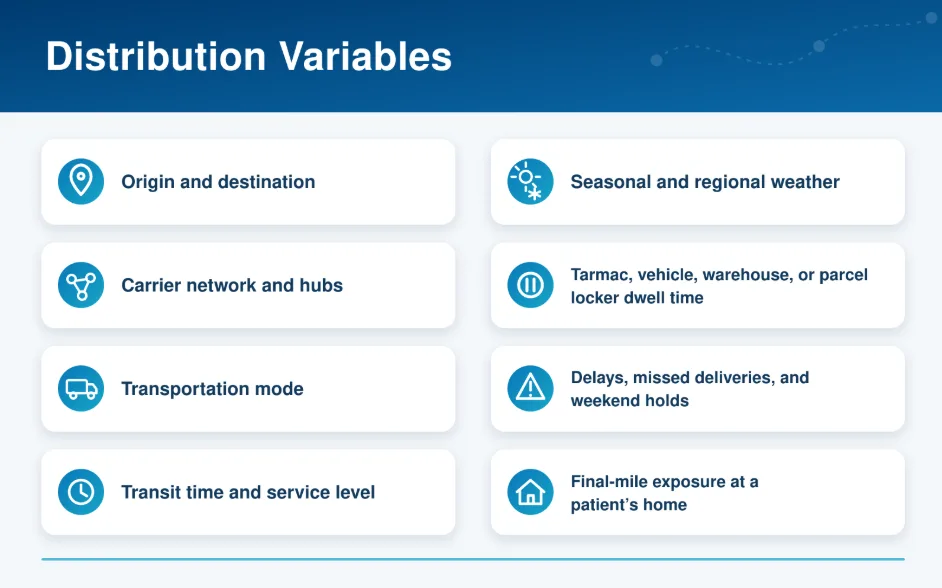
A shipper that performs successfully against a recognized profile may still be over-designed for some routes and under-designed for others. Qualification shows what the packaging did under the tested conditions. The next step is determining whether those conditions adequately represent the intended supply chain.
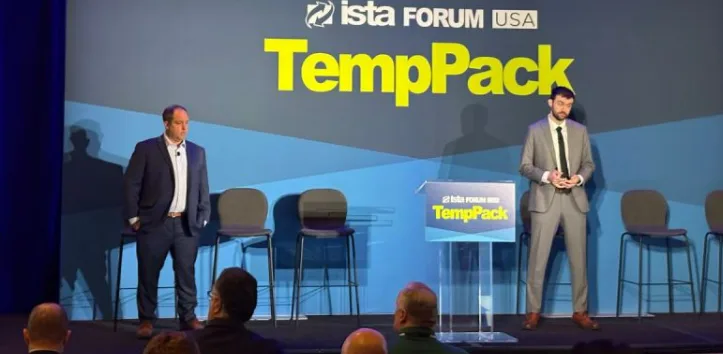
At the 2026 ISTA Forum, Samuel Skran, Engineer at ThermoSafe and Derek Russell, Senior Manager Global Commercial Packaging at Marken UPS Healthcare Precision Logistics presented research using data from nine shipping lanes to develop and evaluate ambient temperature profiles. Their analysis compared these profiles with existing industry standards to identify potential gaps and demonstrate how real-world lane data can refine qualification protocols.
Why shoulder seasons deserve more attention
Summer and winter appear to present the most obvious thermal risks. In practice, pharmaceutical companies may also experience significant challenges during shoulder months, including May and June.
During these transitional periods, a shipment can encounter cool mornings, hot afternoons, and very different conditions at its origin, carrier hub, and destination. Predetermined pack out changeover dates may not reflect the weather a shipment actually encounters.
The growing use of direct-to-patient delivery adds further unpredictability. A package may spend additional time in a delivery vehicle, parcel locker, apartment mailroom, or on a doorstep. These environments may bear little resemblance to the average outdoor temperature.
Global distribution adds another level of complexity. The origin may be using a winter pack out while the destination is moving into summer, or vice versa.
These conditions do not make seasonal packaging inherently unreliable. They demonstrate why the timing, lanes, operational controls, and qualification assumptions behind the seasonal strategy matter.
Seasonal or universal: There is no single right answer
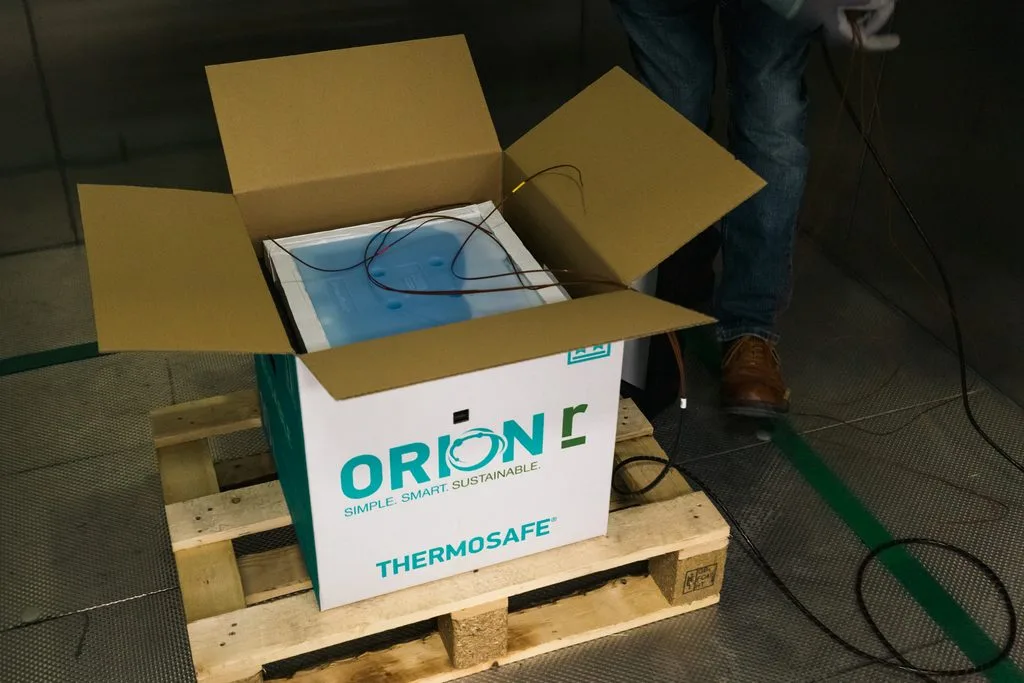
Seasonal packaging typically uses different summer and winter refrigerant configurations. When implemented effectively, this can be a highly cost-effective approach.
A seasonal system can be designed around the expected conditions for a specific portion of the year rather than the most demanding conditions across all seasons. This can reduce refrigerant requirements, shipping weight, material use, and freight expense.
However, seasonal packouts also introduce operational risks:
- Teams must determine exactly when to switch configurations.
- Multiple packout instructions and refrigerant inventories must be managed.
- Employees across shifts and locations must be trained correctly.
- The wrong packout can be selected during variable weather.
- Early heat waves or late cold events may fall outside the planned calendar.
- Global shipments may cross climates or hemispheres.
Universal packouts address some of these concerns by using the same configuration throughout the year. One set of instructions can reduce seasonal changeovers, simplify training, and lower the risk of packout errors.
Universal systems often use phase change materials, or PCM, to provide more precise temperature control. ThermoSafe’s Certis® systems combine water-based and PCM refrigerants and offer universal packouts across different temperature ranges and durations. ChillTech® provides pre-qualified PCM systems for 2°C to 8°C shipments, with durations up to 144 hours.
These higher-performance systems can provide stronger protection across changing climates, but the additional performance generally comes at a higher packaging cost. Depending on the solution, conditioning, storage, freight weight, and operational requirements must also be considered.
As Phil Knight explains:
“The right answer depends on the lane, the product, and the customer’s comfort with risk.”
For a predictable regional network with reliable seasonal changeovers, a seasonal solution may provide the best balance of cost and protection. For a complex global network, variable lanes, or products with very little excursion tolerance, the simplicity and protection of a universal system may justify the additional investment.
Right duration, right size, and right level of risk
The highest-performing shipper is not automatically the best shipper. A packaging system designed for five days of protection may add unnecessary cost, material, and weight to a reliable next-day shipment.
The goal is to select sufficient, dependable protection aligned with the actual shipment.
A sound packaging decision should consider:
- Product temperature range and stability data
- Expected transit time and appropriate delay margin
- Origin, destination, carrier network, and transport mode
- Minimum and maximum payload
- Product dimensions and available payload space
- Seasonal and geographic variability
- Conditioning, storage, labor, and training capabilities
- Cost of the packaging compared with the cost of an excursion
- Freight weight and dimensional weight
- Sustainability and material-use objectives
This is the principle behind choosing the right duration, right size, and right solution. It is not about reducing protection. It is about avoiding both under-engineering and unnecessary over-engineering.
Pre-qualified or custom? Consider the middle ground
Packaging selection is sometimes presented as a choice between an off-the-shelf shipper and a completely custom design. In reality, there is a much broader range of possibilities.
A Ready-Engineered or pre-qualified solution offers existing performance data, established components, and documented packout instructions. It can be a good choice for common payloads, temperature ranges, durations, and distribution conditions.
A Modified Ready-Engineered Solution starts with an existing platform but adjusts selected elements, such as the refrigerants, payload space, or packout configuration. This can provide a closer fit without requiring a completely new system.
Custom packaging does not necessarily mean that every component must be designed from scratch. ThermoSafe’s engineers can draw from an extensive database of existing components and solutions across EPS, PUR, paper-based insulation, vacuum insulated panels, water-based refrigerants, and PCM.
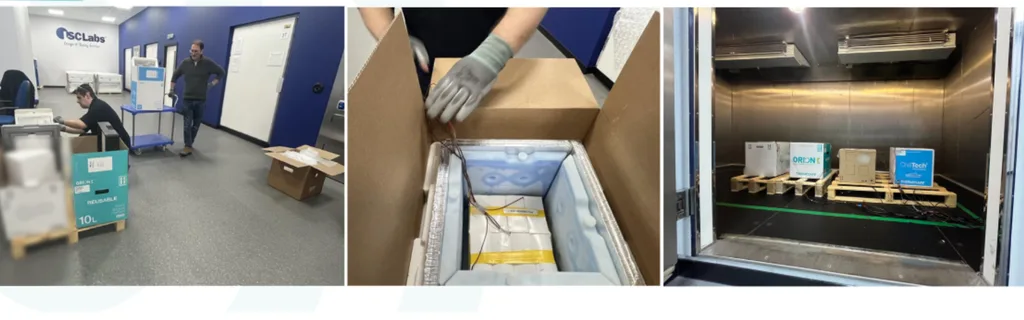
The ISC Labs packaging design process uses thermal modeling to evaluate options before chamber testing. Designs can then be tested through triplicate Operational Qualification studies and supported through Performance Qualification shipments.
The right answer may be an existing solution, a modified platform, or a purpose-designed system. Shipment volume alone should not prevent a company from exploring a better fit.
Flexible platforms can support complex distribution
ThermoSafe’s Envoy® platform demonstrates how a standardized seasonal system can still provide flexibility. Summer and winter configurations support refrigerated and controlled room temperature shipments, while multiple sizes allow companies to match the packaging more closely to the payload.
The Envoy Global platform uses four base shippers and five refrigerants to create 20 configurations. This helps simplify inventory while supporting different payload sizes, temperature ranges, and durations.
One customer has used Envoy within its diagnostics distribution program. The ability to move between shipper sizes while using a familiar platform supports consistency and scale without forcing every shipment into the same box.
ISC Labs has also seen cases where reviewing the lane, payload, and actual excursion pattern led to a different conclusion than the original qualification assumptions.
Qualification should support a decision, not replace one
ISTA profiles and established qualification protocols provide an essential, science-based foundation. But no single profile or packaging technology is automatically right for every product and supply chain.
Seasonal and universal systems can both deliver reliable protection. Pre-qualified and custom solutions can both be cost-effective. The best outcome comes from understanding the product, lane, operational environment, and consequences of failure, then using qualification data to make a well-informed decision.
Find the right fit for your supply chain
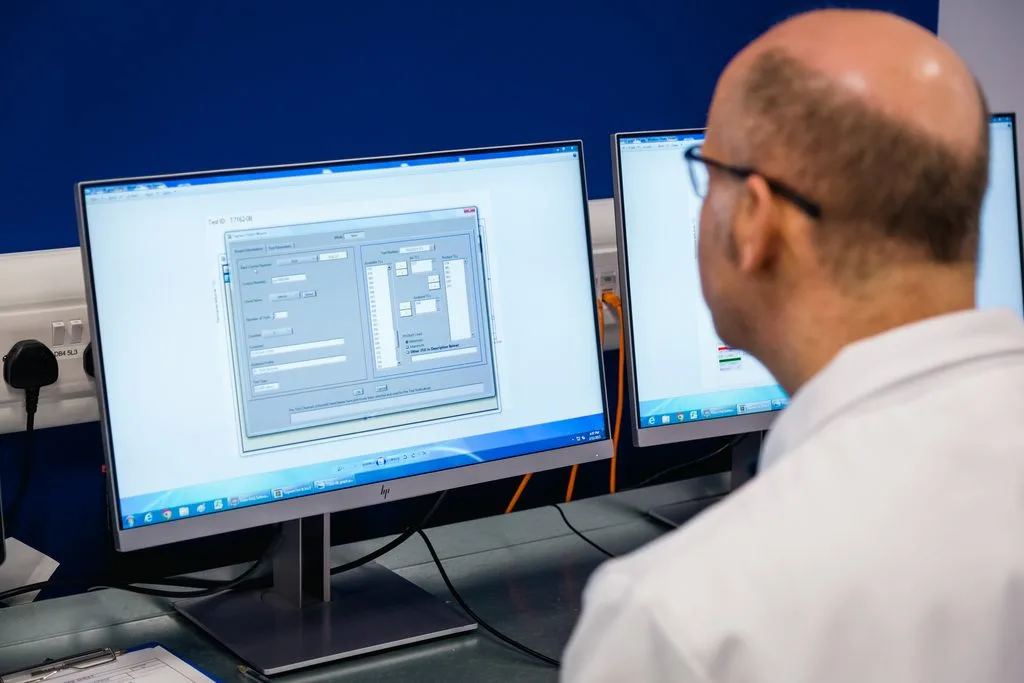
ThermoSafe’s ISC Labs team combines consulting, thermal modeling, packaging design, qualification testing, and real-world distribution experience to help customers balance protection, cost, sustainability, and operational simplicity.
Continue learning with ThermoSafe:
Challenge a common assumption: Read Are Your Cold Chain Packaging Decisions Based on Facts or Assumptions?, including Assumption 1: “If it passes a standard profile, it will work for my supply chain.”
Explore current qualification discussions: Read What the ISTA Forum Revealed About Cold Chain’s Next Chapter.
Understand the growing final-mile challenge: Read Thermal Packaging, Pharmacies, and Patient Access.
Learn how packaging is optimized: Explore ThermoSafe’s packaging design and qualification process.
Sources
About the Author:

Phil Knight is the ISC Labs Engineering Manager for ThermoSafe in Europe, where he leads the development and testing of innovative temperature-controlled packaging solutions. Since taking charge of the laboratory in 2018, he has focused on advancing engineering capabilities that support the safe and reliable transport of temperature sensitive products across global supply chains. With more than 20 years of experience in engineering, Phil has extensive expertise in product development, process engineering, and research and development. Phil holds a Bachelor of Engineering (BEng) in Mechanical Engineering from Sheffield Hallam University.